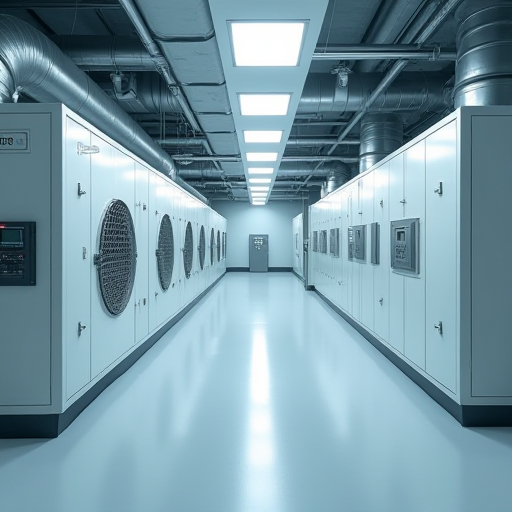



VRF Systems in Commercial Buildings: Is it possible to simultaneously provide both heating and cooling?
Yes, it is entirely possible for VRF systems in commercial buildings to simultaneously provide both heating and cooling through advanced heat recovery technology. This capability transforms how facility managers approach multi-zone climate control, turning architectural complexity into operational efficiency.

Direct Answer & Core Mechanism
Ayrıca Klima, VRF sistemlerine göre daha mı verimli? Enerji. içeriğinde bu konunun ilgili kısmını detaylıca bulabilirsiniz.
The short answer is yes. Heat recovery VRF (Variable Refrigerant Flow) systems utilize a specialized three-pipe or four-pipe refrigerant circuit that allows the outdoor compressor unit to transfer thermal energy from cooling zones directly to heating zones within the same operating cycle. Instead of rejecting heat to the outdoors or extracting it from the air, the system captures waste heat from spaces requiring cooling and redirects it to spaces needing warmth. This internal heat exchange significantly reduces overall electricity consumption compared to conventional dual-fuel setups.
VRF Systems in Commercial Buildings: Is it possible to simultaneously provide both heating and cooling?
Ayrıca VRF klima cihazları neden yeterince soğutma yapmıyor? içeriğinde bu konunun ilgili kısmını detaylıca bulabilirsiniz.
At the heart of this capability lies the inverter-driven compressor and electronic expansion valves (EEVs). The outdoor unit modulates its speed to match the net load demand across all connected indoor units. When a building experiences mixed loads, the system calculates the difference between cooling and heating requirements. If cooling demand exceeds heating demand, excess heat is discharged via a fan coil or thermal sink. Conversely, if heating demand dominates, the system pulls supplemental heat from the ambient outdoor air using its standard vapor compression cycle. Modern controllers manage this balance dynamically, ensuring stable suction and discharge pressures while preventing compressor surge. Facility teams should verify that the selected heat recovery ratio meets local climate expectations, as extreme weather can push single-circuit units toward their operational limits.
Zoning Strategies and Load Distribution

Ayrıca Maltepe bölgesinde VRF sistemleri için servis hizmetleri. içeriğinde bu konunun ilgili kısmını detaylıca bulabilirsiniz.
Effective simultaneous operation depends heavily on strategic zoning. Commercial floor plates typically feature perimeter zones exposed to solar gain and wind chill, while core zones rely on internal equipment loads. During transitional seasons, the perimeter often requires cooling while the core demands heating. By assigning dedicated indoor cassette, ducted, or concealed units to these distinct thermal zones, engineers can leverage the VRF system’s inherent flexibility. Each indoor unit independently regulates refrigerant flow based on its thermostat signal, communicating continuously with the outdoor master controller. Actionable steps for system design include mapping hourly load profiles, selecting appropriate branch selectors for independent zone control, and verifying that total connected capacity stays within the manufacturer’s allowed divergence ratio (typically 130% to 150%).
Energy Efficiency and Operational Constraints
Ayrıca VRF sistemi neden arızalanır? | VRF Sistemleri Neden içeriğinde bu konunun ilgili kısmını detaylıca bulabilirsiniz.
While simultaneous heating and cooling delivers remarkable part-load efficiency, practical constraints must be addressed during specification. The coefficient of performance (COP) and integrated part-load value (IPLV) drop when the system operates far from its balanced design point. Heat recovery systems achieve peak efficiency when thermal loads are relatively equal, often exceeding 400% seasonal efficiency in mild climates. However, electrical infrastructure must support high starting currents, and refrigerant charge limits may require additional outdoor modules for large footprints. Edge cases include high-humidity environments where latent cooling loads dominate, potentially causing coil frost if heating zones cannot absorb enough thermal energy. Regular commissioning checks on EEV calibration and suction line thermistors prevent capacity loss over time.

Installation Requirements and System Sizing
Ayrıca VRF ve VRV sistemleri nelerdir? Otellerde ve iş guide içeriğinde bu konunun ilgili kısmını detaylıca bulabilirsiniz.
Proper installation dictates long-term reliability. Refrigerant piping must follow strict diameter reduction schedules to maintain oil return velocity, especially during partial-load operation. Branch boxes or gas-liquid separators are mandatory to distribute flow evenly and protect the compressor from liquid slugging. Pressure testing with dry nitrogen, followed by vacuum dehydration below 500 microns, establishes a leak-free baseline. Commissioning requires verifying refrigerant subcooling/superheat values at each indoor unit and calculating the exact charge weight using manufacturer tables adjusted for pipe length and elevation differences. Skipping these steps often results in uneven zone performance or premature compressor failure.
Maintenance Protocols and Long-Term Reliability
Predictive maintenance extends system lifespan and maintains simultaneous operation capability. Quarterly inspections should focus on air filter cleanliness, fan motor amperage draw, and drainage line flow rates. Annual tasks include checking refrigerant pressure gauges for signs of slow leaks, testing safety cut-offs, and verifying communication bus integrity between indoor and outdoor controllers. In commercial settings with heavy occupancy, control system firmware updates should be applied during planned downtime to ensure optimal load-sharing algorithms remain current. Clear next steps involve establishing a digital twin or BMS integration point to monitor real-time heat recovery ratios and trigger service tickets before efficiency degrades below 85%.
Frequently Asked Questions
Can standard VRF units provide simultaneous heating and cooling without special hardware?
Only specialized heat recovery models can do this efficiently. Standard cooling-only or heating-only VRF systems reject all excess heat to the outdoors and cannot transfer thermal energy between zones.
What happens if one zone requires maximum cooling while others need maximum heating?
The outdoor unit will operate at peak capacity, but efficiency drops as the system struggles to balance extreme load divergence. Additional outdoor modules or supplemental chillers/furnaces may be required.
How does refrigerant type impact dual-operation performance?
Modern R-32 and R-454B refrigerants offer higher heat transfer coefficients and lower global warming potential, improving simultaneous load handling while reducing overall system charge requirements.
Is VRF compatible with renewable energy integration for commercial use?
Yes. Pairing heat recovery VRF with solar PV arrays or geothermal ground loops significantly reduces grid dependency, though electrical harmonics and voltage stability must be managed through dedicated inverters.
Final Summary
- Heat recovery VRF technology enables true simultaneous heating and cooling by transferring thermal energy internally between zones.
- Inverter compressors and electronic expansion valves dynamically balance mixed loads without mechanical reversing valves.
- Strategic zoning aligned with perimeter versus core thermal profiles maximizes part-load efficiency.
- Electrical infrastructure, refrigerant charge limits, and extreme weather conditions impose practical operational constraints.
- Rigorous installation protocols including nitrogen pressure testing and precise vacuum dehydration are non-negotiable for reliability.
- Continuous BMS monitoring, firmware updates, and predictive maintenance preserve long-term heat recovery performance.
Quick Answer
Core approach for VRF Systems in Commercial Buildings: Is it possible to simultaneously provide both heating and cooling?: planning clearly, measuring consistently, and optimizing iteratively.
Conclusion
In short, a clear strategy helps achieve sustainable and measurable outcomes.
Additionally, this approach supports consistency over time. On the other hand, regular analysis accelerates improvement.